

Aramid
Why Choose Us
R&D
Has the most professional technical team and strong productivity in the industry.
QC Department
Strict quality control, professional quality inspection and testing equipment.
Service Department
Professional technicians and service teams are online 24 hours a day, and respond quickly within 5 minutes.
Flexible Custom
Diversified customized services, 24-hour customized solutions, 3-day fast proofing and fast delivery.
What Is Aramid?
Aramid fiber, commonly known as "aramid fiber". This is a new type of high-tech synthetic fiber. It has excellent properties such as ultra-high strength, high modulus, high temperature resistance, acid and alkali resistance, and light weight.
-
![Aramid Yarn Fiber]() Aramid Yarn Fiber
Aramid Yarn Fiber$ 28.56
-
![Para Aramid Fabric]() Para Aramid Fabric
Para Aramid Fabric$ 15.76
-
![Kevlar Fabric For Clothing Bulletproof]()
-
![Aramid Mesh]()
-
![Carbon Aramid Fabric]()
-
![Nylon Aramid]()
-
![Aramid Filament]()
-
![Aramid Filament Yarn]()
-
![Para Amid]()
-
![Para Aramid Cord]()
-
![Para Aramid Pulp]()
-
![Kevlar Para Aramid Cord]()


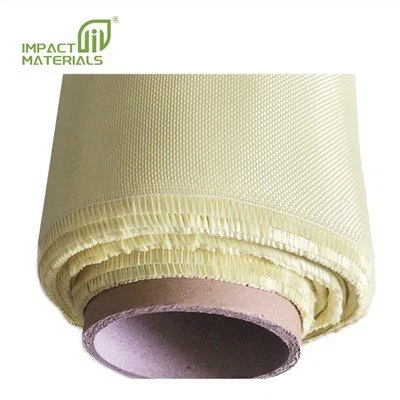


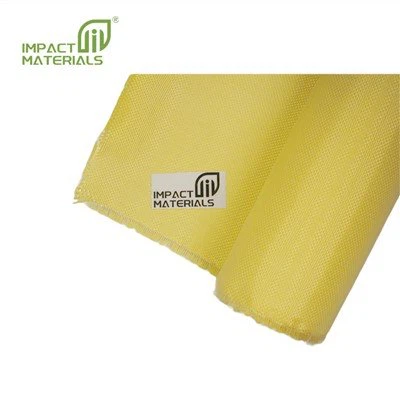
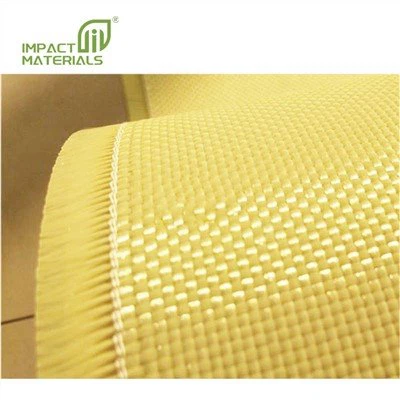

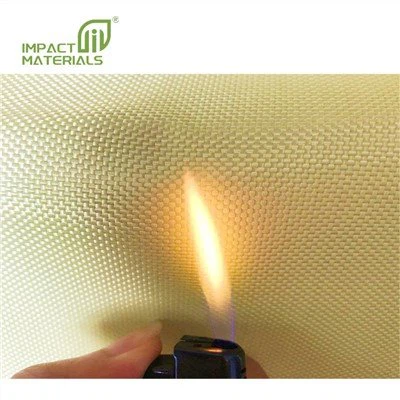
Aramid Application Characteristics
In modern projects, such as subways, tunnels, electrified railways, and industrial plants, etc., all have high requirements for insulation. In the reinforcement of these projects, aramid fiber has an absolute advantage, which also provides a The best choice opportunity.
In particular, it is resistant to strong alkali corrosion, which is incomparable to other FRP composite materials. Due to the strong corrosion of concrete structures in seawater, mainly because it contains more chloride ions, it causes carbonization of concrete and corrosion and expansion of steel bars.
Because the elastic modulus of aramid fiber is 118Gpa, the ductility is particularly good, and its elongation is 1.8%, so it was initially used as a military product abroad, such as bulletproof vests. Use it to reinforce some structures with strict impact requirements, such as the pier of the main channel.
Although the tensile strength of carbon fiber is very high, because it is a brittle material, it can only withstand long-term static load. If it is subjected to long-term dynamic load, its strength cannot be guaranteed. Aramid fiber is not subject to this limitation. Early It is mainly used in military products and is the main material of body armor. Due to its good toughness, its corresponding fatigue resistance is very good. In addition, the shear resistance of aramid fiber is also the strongest of all FRP materials.
Mainly the following steps, surface treatment-brushing primer-bottom impregnating resin--pasting aramid cloth-outer impregnating resin-surface protection, and the operation is very simple. There is no need for large lifting machinery and equipment, generally no chamfering is required. The chamfering of the square column can be done as long as 10ram, because aramid is an organic material, it has good wettability with resin, and the curing time is very short. It is a few hours, while similar other fibers require one to two weeks.
Flame-retardant fabrics can be divided into permanent flame-retardant fabrics according to whether they are washable or not. Washability means that flame-retardant fabrics that can be washed more than 50 times, semi-wash-resistant flame-retardant fabrics and disposable flame-retardant fabrics, Fuel-burning fabrics have different classification standards according to the composition content, including aramid flame-retardant fabrics, ecological flame-retardant fabrics, cotton flame-retardant fabrics, CVC flame-retardant fabrics and nylon flame-retardant fabrics, and their functions are different. Including anti-static, anti-acid and oil-resistant flame-retardant fabrics.
The main properties of aramid flame-retardant fabrics are:
1. Permanent heat resistance and flame retardancy, limiting oxygen index Loi is greater than 28
2. Permanent antistatic property
3. Permanent resistance to acid, alkali and organic solvents
4. High strength, high wear resistance, high tear resistance
5. In case of fire, no droplets will be produced, and no toxic gas
6. When the cloth surface is burned, the cloth surface will be thicker to enhance the sealing performance and not break.
What Material Is Aramid? What Is The Role Of Aramid?


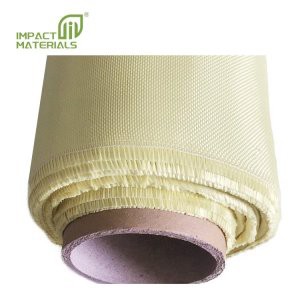

The full name of aramid is "poly-p-phenylene terephthalamide", and the English name is Aramid fiber (the trade name of Teijin Aramid is Twaron and the trade name of DuPont is Kevlar). It is a new type of high-tech synthetic fiber with super High strength, high modulus, high temperature resistance, acid and alkali resistance, light weight and other excellent properties, its strength is 5-6 times that of steel wire, its modulus is 2 to 3 times that of steel wire or glass fiber, and its toughness is twice that of steel wire. The weight is only about 1/5 of the steel wire, and it does not decompose or melt at a temperature of 560 degrees. It has good insulation and anti-aging properties, and has a long life cycle. The discovery of aramid is considered to be a very important historical process in the material industry.
Para-aramid fiber is an important national defense and military industry material. In order to meet the needs of modern warfare, the bulletproof vests of developed countries such as the United States and Britain are made of aramid. The lightweight of aramid bulletproof vests and helmets effectively improves the speed of the military. Responsiveness and lethality. During the Gulf War, American and French aircraft used a large number of aramid composite materials. In addition to military applications, as a high-tech fiber material, it has been widely used in various aspects of the national economy, such as aerospace, electromechanical, construction, automobiles, and sporting goods. In aviation and aerospace, because of its light weight and high strength, aramid saves a lot of power and fuel. According to foreign data, every kilogram of weight reduced during the launch of the spacecraft means a cost reduction of 1 million US dollars. . In addition, the rapid development of technology is opening up more new civilian space for aramid.
According to reports, aramid products are used in body armor, helmets, etc., accounting for about 7-8%, aerospace materials, sports materials accounting for about 40%; tire frame materials, conveyor belt materials, etc., accounting for about 20%, and High-strength ropes and other aspects account for about 13%. The tire industry has also begun to use aramid cords in large quantities to reduce weight and reduce rolling resistance.
Uses Of Aramid
Aramid is widely used in many fields, and its main uses are as follows:
Aerospace
Aramid is widely used in aerospace fields such as aircraft and satellites because of its high strength, high temperature resistance and corrosion resistance.
01
Automobile industry
Aramid can be used in automobile tires, brake systems, air conditioning systems and other components, with high heat resistance and wear resistance.
02
Electrical and electronic fields
Aramid can be used to manufacture electrical insulation materials, cables, batteries and other components, with excellent insulation performance and high temperature stability.
03
Medical and health fields
Aramid can be used to prepare medical fibers, yarns, medical syringes and other medical supplies, with the advantages of not easy to burn and corrosion resistance.
04
Other fields
Aramid can also be used to manufacture bulletproof vests, ships, construction and other fields.
05
What Are The Raw Materials Of Aramid?
The raw materials of aramid are phthaloyl chloride and phenylenediamine.
Aramid, the full name of aromatic polyamide fiber, is a high-performance synthetic fiber with excellent properties such as high specific strength, high specific modulus, high temperature resistance and flame retardancy. In its production process, the main raw materials include phthaloyl chloride and phenylenediamine. These raw materials are polymerized by specific polycondensation methods, such as low-temperature solution polycondensation and interfacial polycondensation, to form aramid polymers. Subsequently, the polymer solution is converted into aramid fiber through a spinning process. The production process of aramid mainly includes two steps: preparation of aramid polymer and polymer spinning. Among them, the dosage ratio of phthaloyl chloride and phenylenediamine is about 2:1, and the domestic supply can meet the demand for raw materials, and the price fluctuation remains stable overall.
In the production process of aramid, the low-temperature solution polycondensation method is widely used because of its low solvent consumption, relatively simple operation steps and high production efficiency. The specific production process includes mixing and dissolving phenylenediamine and DMAC, adding phthaloyl chloride, reacting at low temperature, and gradually heating up to the end of the reaction. Subsequently, calcium hydroxide is added for neutralization and filtration to form a polymerization solution. Finally, spinning is performed by a dry/wet method, and the spinning process mainly includes steps such as coagulation, water washing, drying and heat treatment.

The density of aramid is about 1.44g/cm³.
Aramid, the full name of which is "aromatic polyamide fiber", is a high-performance synthetic fiber with a lower density than carbon fiber and glass fiber, about 20% and 40% lower respectively. This characteristic makes the specific strength of aramid fiber higher than that of carbon fiber and boron fiber, equivalent to 6 to 7 times that of steel wire, while the mass is only about 20% of that of steel wire, which is conducive to the lightweight of products and reinforcing materials. In addition, aramid fiber also has the characteristics of low linear expansion coefficient, high elongation at break, excellent impact strength and high specific elastic modulus.
The excellent properties of aramid fiber make it widely used in many fields, including aerospace, military industry, transportation, electronic communications, tires, etc. According to the different molecular structures, aramid can be roughly divided into two categories: fully aromatic polyamide fiber and heterocyclic aromatic polyamide fiber. Among them, fully aromatic polyamide fiber can be divided into meta-aramid, para-aramid and ortho-aramid according to the different positions of the amide group and the benzene ring. These different types of aramid differ in performance and application, but their common characteristics are low density, high modulus, high strength, cut resistance, corrosion resistance, high temperature resistance, insulation and flame retardancy.
Advantages Of Aramid
Lightweight and comfortable
The specific gravity of aramid fiber is very light, about half of that of polyamide fiber, so the clothing made of it is very light and comfortable, suitable for long-term wear. In addition, aramid fiber has good breathability, which allows the body's moisture and heat to dissipate quickly, making people feel more comfortable.
High strength
The strength of aramid fiber is very high, several times higher than that of ordinary fibers. Its strength mainly comes from its unique molecular structure and the stability of chemical bonds. Therefore, the textiles made of it have good wear and tear resistance, are not easy to get dirty and wear, and are suitable for long-term use.
Wear resistance
The wear resistance of aramid fiber is very good, which is stronger than that of ordinary fibers such as cotton, linen, silk, etc. Its special structure can effectively reduce the wear of the fiber surface, keep the fiber smooth and flat for a long time, and is not prone to burrs and breaks. Therefore, clothing and textiles made of aramid fiber have a long service life.
Our Factory
Superior performance and reliable quality. Products are widely used in fire, military and police, outdoor sports, protective gloves, anti-cut anti-theft bags, security equipment and other protection fields. The company's R&D personnel have more than 20 years of industry experience, adhering to the business philosophy of "service first, quality first", Impact has reliable quality, good reputation, excellent price, fast delivery and perfect service, and wholeheartedly serves the majority of users, for the interests of customers , make customers satisfied! Looking forward to sincerely cooperating with you with the best service.
FAQ
As one of the most professional aramid manufacturers and suppliers, we're featured by cheap products and good service. Please rest assured to wholesale high quality aramid at competitive price from our factory.
Para Aramid Powder, red carbon fiber material, Aramid Short Cut Fiber