

Glass Fiber Fabric
Why Choose Us
R&D
Has the most professional technical team and strong productivity in the industry.
QC Department
Strict quality control, professional quality inspection and testing equipment.
Service Department
Professional technicians and service teams are online 24 hours a day, and respond quickly within 5 minutes.
Flexible Custom
Diversified customized services, 24-hour customized solutions, 3-day fast proofing and fast delivery.
What is Glass Fiber Fabric?
Fiberglass cloth is composed of woven glass fibers giving this fabric high tensile strength, dimensional stability, and high heat and fire resistance. Fiberglass fabric insulation is a high temperature thermal insulator that will not burn and can withstand exposure to temperatures up to 1000°F. Fiberglass cloth insulation can be used to protect insulated equipment and pipes.


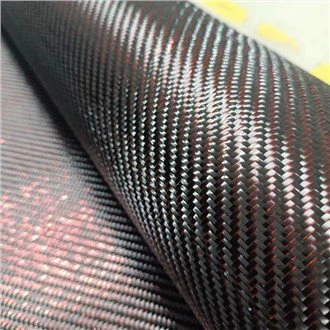


Applications of Glass Fiber Fabric
Glass Fiber Fabric is durable, safe and offers high thermal insulation. It not only provides better insulation and is Glass Fiber Fabric is widely used in industries given below:
Manufacturing: Fiberglass grating has an embedded grit surface for slip resistance in wet areas or in places where hydraulic fluids or oils are present.
Metals and mining: Fiberglass is used to make grating especially in areas that are exposed to chemical corrosion.
Power generation: Many areas of the power generation industry like tank farms, scrubbers, and others use fiberglass as it has non-conductive properties.
Automotive industry: Fiberglass is extensively used in automobile industry to make vehicle and body kits and components.
Aerospace & Defense: Fiberglass is used to manufacture parts for both military and civilian aerospace industry including test equipment, ducting, enclosures, and others.
Docks and marinas: Fiberglass does not get corroded, rusted and damaged by salty watery environments.
Fountains and aquariums: Fiberglass is used to support rocks to help in circulation and filtering from under the rocks. Where there are large public fountains, fiberglass grating is used to protect spray headers and lights from damage. This also helps to prevent people from drowning in the fountains.
Pulp and paper: Fiberglass has chemical corrosion resistant properties and is used in many applications because of its corrosion resistance and anti-slip properties.
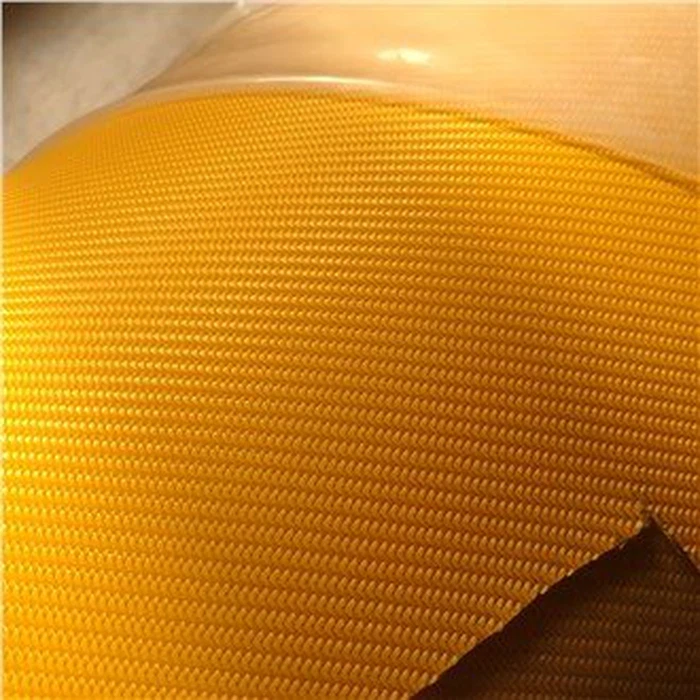
1.Glass fiber cloth is used from low temperature -196°C to high temperature 300°C, with weather resistance.
2.Glass fiber cloth is non-adhesive and not easy to adhere to any substance.
3.Glass fiber cloth is resistant to chemical corrosion, strong acid, strong alkali, aqua regia and various organic solvents, and can withstand the action of drugs.
4.The friction coefficient of glass fiber cloth is low, which is the best choice for oil-free self-lubrication.
5.The light transmittance of glass fiber cloth reaches 6-13%.
6.Glass fiber cloth has high insulation performance, it’s anti-UV and anti-static.
7.Glass fiber cloth has high strength and good mechanical properties.
8.Glass fiber cloth is chemical resistant.
Main Uses of Glass Fiber Fabric
Usually glass fiber cloth manufacturing is divided into the following steps
Warping
Purpose of warping is line up the warp yarn on warping beam according to width and weight of fabric, hence may ready for sizing process.
Sizing
Purpose of sizing is avoiding the damage of warp yarn by friction of weaving parts to yarn breakage or damage on surface. It also may combine several warp beams into one weaving beam to reach enough yarn ends.
Heddling
Before weaving beam loading on weaving loom, all warp yarn need to be hooked up with heddles, droppers & reed.
Weaving
We use high speed air-jet weaving looms for weft yarn insertion.
De-Sizing 1
After weaving, the sizer need to be removed from fabric, fiber glass fabric is using high temperature treatment which will remove most of seizer out.
De-sizing 2
After the 1st desizing, the embryonic is set in a batch oven to to continued heated to remove the rest 10% sizer off.
Finishing
After desizing, the fabric should be treated by the SILANE to improve the interlocking ability between the glass fabric and epoxy resin.
Fabric examination for quality checking
Check the fabric quality and cut off the un-qualified parts when necessary.
Materials of Glass Fibre Fabric
Fibreglass fabric coated with PTFE is made up of high-capability fibreglass which has steeped into PTFE. It is a new product with high capability and multiform function of complex material. Fibreglass fabric coated with PTFE has various good capabilities and it is widely used in the aircraft industry, paper manufacture, food, environment protection, print and painting, costume, chemical, glass manufacture, medical, electronic, insulation, building (basic cloth of topping frame), sharpener slice, machinery, etc.
A fibreglass fabric with silicone coating is made of fibreglass cloth and coated on one side or both sides with specially bonded silicone rubber. The physiologically inert silicone rubber doesn’t only increase the strength but also heat insulation properties, fire resistance, ozone resistance. Silicone coated fibreglass fabric protects against impact from oxygen ageing, climate ageing and oil.
Fireproofing fibreglass cloth of complex aluminium foil is mainly made by special technique adopting the special type of fireproofing bond which formed in a thick membrane, it has a smooth surface and high luminous reflectance and tensile strength, good sealing capability, and it is gas-proofing and waterproofing.
PVC fibreglass fabric (fibreglass fabric coated with PVC)
PVC coating fabric takes fibreglass fabric, fibre-cotton fabric and polyester fabric as basic cloth, coating by special technique. The main capability and characteristics are waterproofing, flame resistant, mildew-proofing, cold-proofing and corrosion-proofing; seasoning resistance; ultraviolet-proofing; easy washing; high-temperature resistance (180℃), good capability of heat maintaining.
Acetate: Hand Wash — Air Dry
Acetate is a man-made fibre, often found blended with other fibres to create beautiful, easy-to-drape clothing. Acetate and acetate blends clean up well, but they can be very sensitive to dye transfer. Check the care label, and then wash garments containing acetate fibres in cold water.
Cotton: Hot Water Wash — Tumble Dry Warm
Cotton is a worldwide favourite for comfortable, versatile clothing. A natural fibre, cotton can be found in garments as casual as a T-shirt or as elaborate as a ball gown.
Cotton fibres will shrink unless the fabric has been preshrunk or processed, so start with the care label. "Coldwater only" may signal that your ankle-length cotton trousers will convert themselves to capri pants if not washed correctly.
Linen: Cool Water Wash — Air Dry
Linen is a natural fiber, made from the flax plant. Check care labels on linen garments to determine whether the garment must be dry-cleaned. If machine-washable, wash according to label instructions, using water appropriate to the garment's color. Linen absorbs more water during the washing process than other fibres, so guard against overcrowding in the washer and dryer. Iron linen from the inside out, using steam at a hot iron setting.
Polyester: Cool Water Wash — Tumble Dry Warm or Air Dry
The last century's "wonder fibre," polyester creates colorful, durable, easy-care garments. Most polyester fabrics may be machine-washed using warm water, but check care labels first.
Silk: Hand Wash or Cool Warm Wash — Tumble Dry Cool or Air Dry
Supple, strong and lustrous, this natural fiber is among the world's oldest clothing materials. While silk fiber itself is washable, many weave patterns used for silk fabric will tighten or pucker if washed, and deep dye tones may not be colour-fast.
The Glass Fiber Fabric market is currently experiencing a significant increase in growth, driven by various factors. One of the primary drivers is the increasing demand for Glass Fiber Fabric in industries such as healthcare, automotive, and consumer electronics. Technological advancements, including the development of more efficient and cost-effective Glass Fiber Fabric, are also contributing to this growth. Additionally, the growing awareness of the environmental impact of Glass Fiber Fabric has led to the creation of more sustainable and eco-friendly options, further boosting market expansion. Government regulations and policies are also playing a crucial role in shaping the market, as they can affect the production, distribution, and use of Glass Fiber Fabric. Overall, the Glass Fiber Fabric market is expected to continue growing steadily in the coming years, driven by these and other factors.
The global Glass Fiber Fabric market is driven by several key factors. One of the primary drivers is the increasing demand for Glass Fiber Fabric in various industries. As the world economy continues to grow, the demand for Glass Fiber Fabric is expected to increase as well. Additionally, technological advancements are also driving the market, as new and improved Glass Fiber Fabric are being developed to meet the needs of consumers. Another important driver is the growing awareness of the environmental impact of Glass Fiber Fabric, which has led to the development of more sustainable and eco-friendly options. Finally, government regulations and policies are also play a significant role in shaping the market, as they can impact the production, distribution, and use of Glass Fiber Fabric.

Types of Glass Fiber Fabric
As to the raw material glass used to make glass fibers or nonwovens of glass fibers, the following classification is known:
A-glass: With regard to its composition, it is close to window glass. In the Federal Republic of Germany it is mainly used in the manufacture of process equipment.
C-glass: This kind of glass shows better resistance to chemical impact.
D- Glass: An important type of glass fiber is D-type glass fiber. Boron contains the trioxide compound intensively. Boron trioxide is used as a starting material for the synthesis of other boron compounds such as boron carbide in the production of fluids for glass and enamels, and in the production of heat resistance and thermal shock resistance borosilicate glasses.
E-glass: This kind of glass combines the characteristics of C-glass with very good insulation to electricity. E-glass is basically a calcium alumino-borosilicate glass containing less than 1% alkali calculated as Na2O.
AE-glass: Alkali resistant glass.
ECR-glass: It is also called electronic glass fiber. It has a good waterproofing ratio, high mechanical strength, electrical acidic and alkali corrosion resistance. It shows better properties than E-Type glass fiber. The biggest advantage is a more environmentally friendly glass fiber.
AR-glass: Alkali Resistant (AR: Alkali Resistant) Glass Fibers are specially designed for concrete construction. They contain alkaline zirconium silicates. They are effective to prevent concrete cracking. This adds strength and flexibility to concrete. They are also used for asbestos changes. They have alkali strength and strength. It is very difficult to dissolve in water. Not affected by pH changes. They are easily added to stainless steel and concrete mixtures. Intensive Magnesium and Calcium added fibers. Ideal for applications with high acidic strength and mechanical strength.
Our Factory
Superior performance and reliable quality. Products are widely used in fire, military and police, outdoor sports, protective gloves, anti-cut anti-theft bags, security equipment and other protection fields. The company's R&D personnel have more than 20 years of industry experience, adhering to the business philosophy of "service first, quality first", Impact has reliable quality, good reputation, excellent price, fast delivery and perfect service, and wholeheartedly serves the majority of users, for the interests of customers , make customers satisfied! Looking forward to sincerely cooperating with you with the best service.
FAQ
As one of the most professional glass fiber fabric manufacturers and suppliers, we're featured by cheap products and good service. Please rest assured to wholesale high quality glass fiber fabric at competitive price from our factory.
1k Carbon Fiber Cloth, fiber glass cotton, glass fiber fabric