

UHMWPE Fiber
Why Choose Us
R&D
Has the most professional technical team and strong productivity in the industry.
QC Department
Strict quality control, professional quality inspection and testing equipment.
Service Department
Professional technicians and service teams are online 24 hours a day, and respond quickly within 5 minutes.
Flexible Custom
Diversified customized services, 24-hour customized solutions, 3-day fast proofing and fast delivery.
What is UHMWPE Fiber?
Ultra-high molecular weight polyethylene fiber is referred to as UHMWPE fiber, also known as high-strength PE fiber. Its molecular weight is between 1.5 million and 8 million, which is dozens of times that of ordinary fibers, which is the origin of its name. UHMWPE fiber is one of the three major high-tech fibers in the world today, and it is also the toughest fiber in the world. Its strength is 15 times that of steel and 2 times higher than that of carbon fiber and aromatic 1414. It is currently the main material for making body armor.
-
![UHMWPE Yarn Fiber]() UHMWPE Yarn Fiber
UHMWPE Yarn Fiber$ 16.75
-
![UHMWPE Staple Fiber]()
-
![Dyed UHMWPE Fiber]()
-
![Bulletproof UHMWPE Fiber]()
-
![Colored UHMWPE Fiber]()
-
![Ultra High Molecular Weight Polyethylene Fiber]()


Based on UHMWPE yarn’s advantageous properties, it has now become one of the high-tech materials rapidly developed in recent years and widely applied in such fields as safety protection, aviation, spaceflight, navigation, electronics, weapon, shipbuilding, building material, sports, medical treatment and so on. Products made up of the fiber include bulletproof jackets, ballistic helmets, financial vehicles, ballistic shields, tanks, naval armor protection boards, parachute hawser, watercraft Oceaneering cordage,mountain-climbing rope, fishing net and tread, boat, gig and arrow, pat, ski, man-made nearthrosis and ligament, safety protection cover,anti-impact vessel and so on.
Ballistic Protection: UHMWPE fibers are extensively used in the production of ballistic-resistant materials, such as bulletproof vests, helmets, and vehicle armor. Their high strength and low weight make them ideal for providing protection against bullets and projectiles.
Cut-Resistant Gloves and Clothing: UHMWPE fibers are used to make gloves, aprons, and clothing for industrial workers who need protection against sharp objects and cutting hazards. They provide excellent cut resistance while remaining lightweight and flexible.
Ropes and Cables: UHMWPE fibers are employed in the manufacturing of ropes and cables used in applications like sailing, mountaineering, fishing, and towing. These fibers offer high strength, low stretch, and resistance to abrasion, making them suitable for demanding outdoor activities.
Fishing Lines: UHMWPE fibers are commonly used in the production of fishing lines due to their high strength and low visibility in water. They offer anglers the ability to use thin lines with exceptional tensile strength.
Marine and Offshore Applications: UHMWPE ropes and cables are used in marine and offshore industries for mooring, towing, and lifting operations. They resist saltwater corrosion and have a longer lifespan compared to traditional ropes.
Aerospace: UHMWPE fibers find use in the aerospace industry for applications like parachute cords and suspension lines due to their high strength and lightweight properties.
Medical Implants: UHMWPE is utilized to manufacture orthopedic implants such as hip and knee replacements. Its biocompatibility, low wear rate, and durability make it a suitable material for joint replacements.
Sports Equipment: UHMWPE is used in sports equipment like tennis strings, snowboard bases, and hockey skate blades due to its strength, flexibility, and resistance to impact.
Automotive Parts: UHMWPE can be used in automotive applications, including gears and components in the transmission system, because of its wear resistance and low friction properties.
Industrial Applications: UHMWPE can be found in various industrial equipment components, including conveyor belts, bearings, seals, and rollers due to its low friction, high wear resistance, and chemical resistance.
Electrical and Electronics: UHMWPE is used as an insulating material in the electrical and electronics industry due to its dielectric properties and resistance to moisture.
Defense and Law Enforcement: In addition to ballistic protection, UHMWPE fibers are used in various defense and law enforcement applications, including lightweight armor for vehicles, shields, and equipment.
Mining and Construction: UHMWPE materials are used in mining and construction for wear-resistant components like chutes, liners, and conveyor systems.
Advantages of UHMWPE fiber?


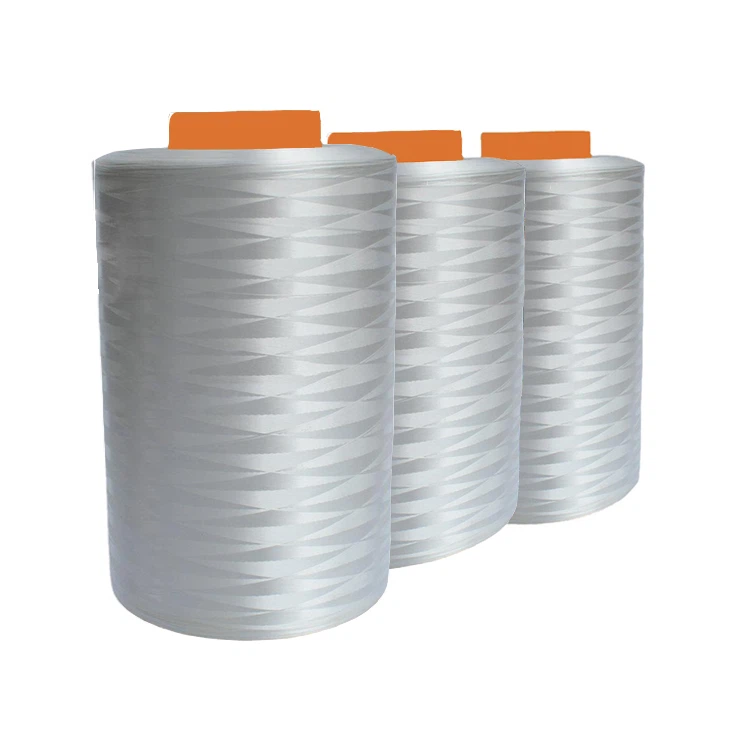
UHMWPE fiber has unparalleled performance advantages. At present, there is no simple polymer material with so many excellent properties, and it has the reputation of "the king of plastics".
UHMWPE fiber is light in weight, with a density of only 0.97 glem', and has strong chemical inertness. Strong acid and alkali solutions and organic solvents have no effect on its strength. And it has excellent weathering resistance and UV resistance. After 1500 hours of sunlight, the fiber strength retention rate is still as high as 80%. It is still ductile at the temperature of liquid ammonia (-269 ℃), and can maintain excellent impact strength in liquid nitrogen (-196 ℃), which is also unmatched by other plastics. In addition, the wear resistance and bending resistance and tensile fatigue properties of UHMWPE fibers are also the strongest among the existing high-performance fibers, with outstanding impact resistance and cutting resistance. A UHMWPE fiber that is only a quarter of the thickness of a hair is basically cut with scissors. Compared with other engineering plastics, it mainly has shortcomings such as low heat resistance, stiffness and hardness, but it can be improved by methods such as "filling" and "cross-linking".
The basic theory of UHMWPE fiber was put forward as early as the 1930s. However, the real breakthroughs in technology are gel spinning and plastic spinning. In the 1970s, the University of Leeds in the United Kingdom first successfully developed high molecular weight polyethylene fibers with a molecular weight of 100,000. In 1975, the Dutch DSM company invented the gel spinning method using decahydro tea as a solvent, and successfully prepared UHMWPE fiber, and applied for a patent in 1979. After ten years of hard work, it has been confirmed that gel spinning is an effective method to manufacture high-strength polyethylene fibers, which has industrialization prospects, and its raw materials are easy to obtain and production costs are low. UHMWPE fibers immediately attracted the attention of the world's industrial powers.
Due to its many excellent properties, UHMWPE fibers have shown great advantages in the high-performance fiber market, including mooring ropes in offshore oil fields to high-performance lightweight composite materials. Equipment and other fields play a pivotal role, especially in the military field.
In aerospace engineering, due to its light weight, high strength and good impact resistance, UHMWPE fiber composite materials are suitable for wingtip structures of various aircraft, spacecraft structures, buoy aircraft, deceleration parachutes, etc. In the civilian field, ropes, cables, sails and fishing gear made of UHMWPE fibers are suitable for marine engineering, and the breaking length under dead weight is 8 times that of steel ropes and 2 times that of aramid fibers.
In industrial applications, UHMWPE fibers and their composites can be used as pressure-resistant containers, conveyor belts, filter materials, automotive buffer boards, etc. In sporting goods, helmets, snowboards, sailing boards, fishing rods, rackets, bicycles, gliders, ultra-lightweight aircraft parts, etc. have been made, and their performance is superior to traditional materials. In medicine, it has been used in the fields of dental tray materials, medical implants and plastic sutures, and has been used clinically.
Properties of UHMWPE Fiber
High Tenacity: UHMWPE fiber has a high tenacity of 35cN/dtex or greater, which is more than ten times as strong as steel.
Low Density: UHMWPE fiber has a low density of 0.97g/cm3, making it one of the lightest synthetic fibers available on the market.
High Modulus: UHMWPE fiber has a high modulus of 1100cN/dtex or greater, which means it has high resistance to deformation and stretching.
Chemical Resistance: UHMWPE fiber has excellent chemical resistance to various acids, alkalis, organic solvents and other corrosive substances.
UV Resistance: UHMWPE fiber has high resistance to UV radiation, which means it does not degrade or weaken even after long-term exposure to sunlight.
Hydrophobic: UHMWPE fiber is hydrophobic, which means it does not absorb water or moisture. This property makes it suitable for outdoor applications where humidity or wet conditions are present.
Low Thermal Conductivity: UHMWPE fiber has low thermal conductivity, which means it does not conduct heat well. This property makes it excellent for high-temperature applications where insulation is necessary.
Production process of UHMWPE Fiber
The main production process of ultra-high molecular weight polyethylene fiber is as follows: preparation of raw materials - twin-screw extruder - spinning box - spinneret - extraction - drying - heating and stretching - winding.
Preparation of raw materials
At present, the preparation methods of raw materials at home and abroad are different, the solvents used are different, and the solid content is also different. Therefore, there is no fixed unified mode, and the equipment for production is also very different, and conventional melt spinning does not add solvent. But no matter which method is adopted, the desired effect can be achieved in the end. Because the production is continuous, the ratio of raw materials cannot fluctuate, and it is required to be uniform and consistent. Although the increase in solid content is one of the important means to increase production, the stretching ratio will also increase accordingly, and the overall speed will respond faster, which increases the difficulty of operation. The amount of hair is significantly increased, which is not easy to grasp. However, if the percentage of solid content can be controlled within an appropriate concentration, it is still possible. It should be done according to one's own situation. Increasing the speed of the metering pump is also one of the effective means to increase production.
Stirring materials
The screw extruder plays the role of conveying, stirring, heating, and pressurizing the material. First of all, the slurry before entering the "screw" must be degassed and must not contain water vapor. The material must be fully mixed and stirred during the conveying process. The heating temperature of each zone should be set in combination with the position of the kneading block on the screw, and a certain conveying pressure should be guaranteed. The setting of the screw kneading block is very theoretical, and different combinations will have different effects on the stirring of the material.
Spinning
The main function of the spinning box is to keep warm; control the temperature; and evenly distribute the material to each spinning component.
Spinning
The metering pump extrudes the material into filaments, which is achieved through the spinneret. The pore size and planing surface shape of the plate are its important technical parameters, which play a vital role in the molding and tensile properties of the fiber. The temperature at the spinning box and the spinneret is matched, and the temperature parameters are set by observing the molten state of the ejected filaments. However, in order to accurately control, some specific technical conditions and practical experience are also required.
Extraction
It is mainly to extract and replace a large amount of solvent in the filaments to obtain "pure" high-strength polyethylene fibers. The selection of extractants varies from manufacturer to manufacturer, and the production process is also different.
The molecules are wrapped and isolated by a large amount of solvent and cannot form molecular chains. If the molecular chains cannot be formed, the silk cannot have real strength. At this time, the inside of the fiber is actually like a circular tubular mesh body, and the molecular particles of polyethylene are in its pipe network. As the fiber is continuously stretched and thinned, the solvent is continuously precipitated, and the shape of the pipe network changes from round to long, from combed to dense, the density between the material molecules gradually increases, and the arrangement of the macromolecules gradually changes from a disordered state to a partially ordered state.
Drying
The main purpose of the drying process is to remove the extractant stuck on the filaments and dry them for drawing. This process seems simple to control, but it is actually difficult. If the process temperature and tension are not properly controlled, a large number of twisted and stiff filaments will be produced, resulting in the inability to continue processing the semi-finished filaments. The control of drying temperature and drying length is the key. This process should not be underestimated, as it is directly related to the quality of the post-drawing product.
Heating drawing
The drawing of ultra-high molecular weight polyethylene fiber is basically the same as the drawing process of conventional polyester staple fiber in form, but the control accuracy required is very different. This fiber must adopt a multi-stage drawing method to achieve high strength and high modulus characteristics. In each stage of under-drawing, the intermolecular structure changes greatly. With the stretching, the macromolecules change from disordered to ordered, directional arrangement, and the crystallinity gradually increases. Only when the orientation degree of the macromolecules of the fiber along the fiber axis increases, the number of macromolecular chains produced is large, the cohesion is greater, and the strength of the fiber is naturally higher. As the crystallinity of the fiber increases, the initial modulus also naturally increases. When the fiber is resisted by external forces, the smaller the elongation, the smaller the deformation.
Winding Forming
Requirements for silk roll forming: the silk tube has no collapsed edge, no burrs, and the silk bundle must be fixed in length and weight. The so-called fixed length and fixed weight do not simply refer to the requirements for the length and weight of the tow. It has a deep connotation and is very difficult to grasp accurately. It requires that all production processes must be normal and stable. Only when the fiber fineness is always uniform can it be guaranteed. If anyone can truly achieve the technical level of fixed length and fixed weight, he will reach the pinnacle in the field of high-strength fiber.
Our Factory
Superior performance and reliable quality. Products are widely used in fire, military and police, outdoor sports, protective gloves, anti-cut anti-theft bags, security equipment and other protection fields. The company's R&D personnel have more than 20 years of industry experience, adhering to the business philosophy of "service first, quality first", Impact has reliable quality, good reputation, excellent price, fast delivery and perfect service, and wholeheartedly serves the majority of users, for the interests of customers , make customers satisfied! Looking forward to sincerely cooperating with you with the best service.
FAQ
As one of the most professional uhmwpe fiber manufacturers and suppliers, we're featured by cheap products and good service. Please rest assured to wholesale high quality uhmwpe fiber at competitive price from our factory.
UHMWPE Staple Fiber, twill carbon fiber fabric, aramid honeycomb core fabric